What changes on 1 November
The switch follows the date you buy, not the date you leave. The Japan Tourism Agency's traveller page says that up to October 2026 shops sell to eligible visitors at the tax-exclusive price, and that from purchases on 1 November 2026 the system moves to a refund method (リファンド方式): you pay tax at the till, and the tax amount is refunded after customs confirms the export.
Tax-free shopping is not ending, and the ¥5,000 minimum stays. What goes is the tax-free price at the till, the cap on consumables and the sealed bags. The agency's comparison table and its page on the current system set out the differences:
| Point | Purchases to 31 October 2026 | Purchases from 1 November 2026 |
|---|---|---|
| Price at the till | Tax-exclusive | Tax-inclusive |
| Minimum spend | ¥5,000 per shop per day | ¥5,000 excluding tax, per shop per day |
| Consumables (food, cosmetics, medicine) | ¥5,000 to ¥500,000 per shop per day, sealed packaging | No upper cap, no special packaging |
| Your money | Saved at the till | Refunded after customs confirmation |
The refund is the consumption-tax amount included in what you paid, so the receipt is the place to see how much is at stake.
Who qualifies and what counts
The agency's list of eligible purchasers covers non-residents of foreign nationality who can show that less than six months have passed since they entered Japan; for most visitors the passport does that. Diplomatic, official and US forces status are handled separately, and cruise passengers on a sightseeing landing permit also qualify, with a copy of the passport accepted for them.
Japanese citizens living abroad qualify if they have lived outside Japan continuously for two years or more and are within six months of returning. They show a passport plus one proof of residence abroad: a copy of the family-register attachment (戸籍の附票), a residence certificate (在留証明, including the electronic version) or a My Number Card that records the move abroad.
What you can buy is limited by what you carry. The English refund-method page excludes gold and platinum bullion and goods already exempt from consumption tax, and the Japanese traveller FAQ limits purchases to quantities you can take out of Japan yourself at departure.
Consumables are where the new rules bite. Food, drinks and cosmetics no longer go in sealed bags, but if you open or use any of them in Japan you cannot get customs confirmation for them. If you are buying skincare or medicine, our guide to reading a Japanese drugstore label helps you check what you are buying before you commit to carrying it home.
Terms you will see
| Japanese | Meaning |
|---|---|
| 免税店 (legally 輸出物品販売場) | Tax-free shop under Article 8 of the Consumption Tax Act |
| リファンド方式 | The refund method from 1 November 2026 |
| 税関確認 | Customs confirmation at departure |
| キオスク端末 / 電子端末 | Passport-reading terminal for the tax-free procedure |
| 返金事業者 | Refund agent appointed by the shop |
| 消耗品 / 特殊包装 | Consumables / the sealed packaging now abolished |
At Kansai Airport: before you check in
The agency says the tax-free terminals and customs inspection points are in the international departure lobby, before baggage check-in, at each airport and seaport. Do the procedure first: the English FAQ says checked baggage cannot be retrieved once handed over, even if the terminal then asks for an inspection.
Kansai is one of seven airports, with Narita, Haneda, Chubu, Fukuoka, New Chitose and Naha, where you can complete the procedure online through Visit Japan Web while connected to a dedicated Wi-Fi network in the area before security, instead of using a terminal. The agency's page links to Japan Customs floor maps for each airport; check the Kansai map before your trip.
If you fly from Osaka on a domestic flight and leave Japan from another airport, do the check at that final airport. On a cruise that starts or ends abroad, it happens at the last Japanese port, using an electronic terminal; on a fly-and-cruise trip, at the airport when you finally leave.
Leave time for an inspection. The agency says the customs check, including any inspection, must be finished before boarding procedures. Our Kansai Airport to Osaka guide covers the trains and buses to the airport, so you can plan an earlier arrival.
Getting the money back
The refund does not come from the government. The traveller page says each tax-free shop or a refund agent it appoints pays it, and the FAQ lists bank transfer, credit card transfer, app-based refunds and cash as possible methods. You are told how to register your refund method when you buy, and the refund is generally paid after customs confirmation.
The agency's FAQ for shops adds three points that affect what you receive:
- Fees: no rule says whether you or the shop pays a refund agent's fee; the agency notes that abroad travellers usually bear it. The government itself charges nothing.
- Form of refund: because the law does not fix the method, a shop may refund in coupons or points usable only at certain places, or refund more than the tax as a discount.
- Deadlines: no legal deadline exists for claiming; shops are encouraged to agree one with you in advance, after which an unclaimed refund is not paid.
So before paying, ask three questions at the counter: how is the refund paid, is a fee deducted, and is there a deadline to claim it?
Planning an Osaka shopping trip
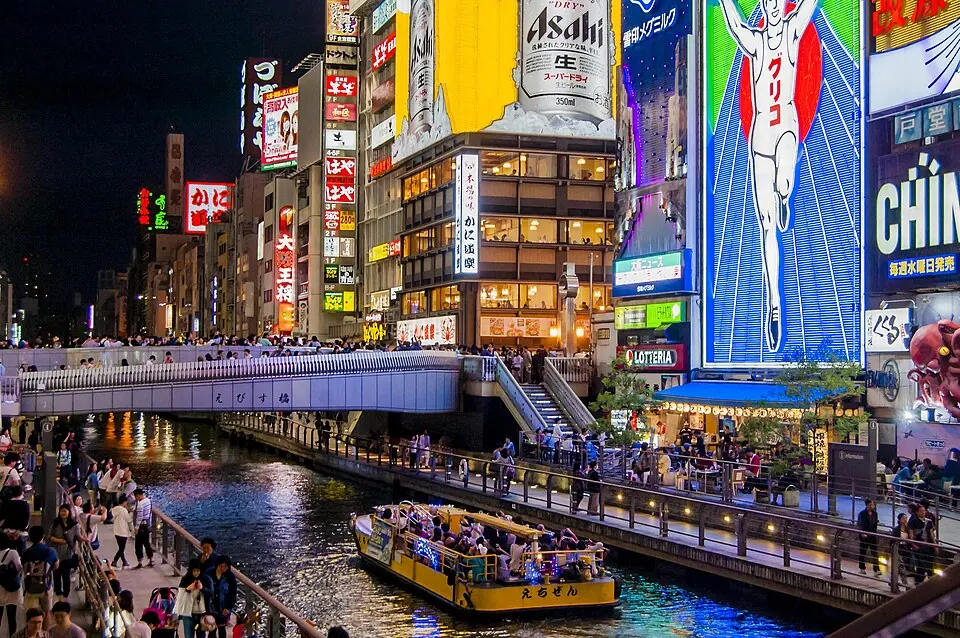
Osaka has thousands of tax-free shops. The agency's count by prefecture gives 7,184 in Osaka on 30 September 2025, against 16,386 in Tokyo, 2,231 in Kyoto, 2,212 in Hyogo and 64,499 nationwide. Not every shop will handle refunds the same way, so a tax-free sign tells you the shop is a tax-free shop, not how its refund works.
Budget for the full price. Under the refund method the tax-inclusive price leaves your card on the day, and the refund comes later, possibly less a fee.
Separate what you will eat from what you will carry home. Because one used item voids the whole receipt, buy snacks you plan to open in Japan on a different receipt from gifts. A day trip to Kyoto or Nara changes nothing: the ¥5,000 threshold is per shop per day, and each receipt is checked on its own.
Two cases need extra care. Items of ¥1 million or more each, excluding tax, carry product details such as serial numbers in the shop's record, and customs may ask to see an appraisal certificate or warranty with them, so keep those with the item. Having tax-free goods posted abroad separately (別送) is no longer an option: the comparison table says that arrangement ended on 31 March 2025, and the traveller FAQ says whether a shop can send goods overseas for you depends on the shop.
The rules are national, so the same steps apply at Narita and Haneda; our Tokyo tax-free guide covers those airports. This guide does not cover duty-free shops after security or what your home country charges when you bring the goods in.


